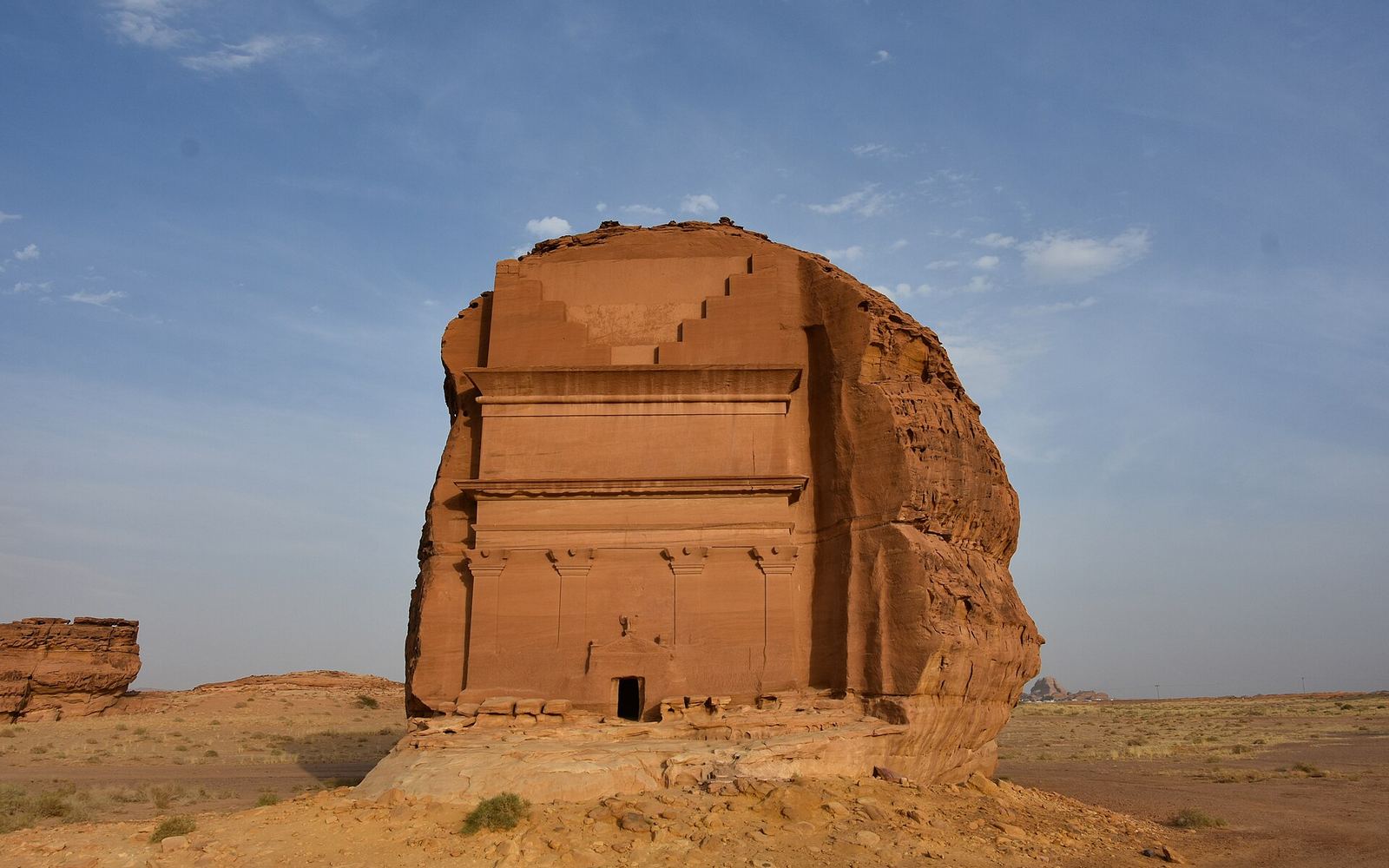
- Area22 km north of AlUla town
- Best forHistory, architecture, photography
- Time2–3 h (half a day with transfers)
- TicketsGuided tours only, from around SAR 95
Hegra, also known as Al-Hijr and long called Mada'in Salih, was the second city of the Nabataean kingdom after Petra. Between roughly the 1st century BC and the 1st century AD, its people carved more than a hundred monumental tombs into the sandstone outcrops here, many with decorated facades and inscriptions naming the families buried inside. In 2008 it became Saudi Arabia's first UNESCO World Heritage Site, and it remains the reason most people travel to AlUla.
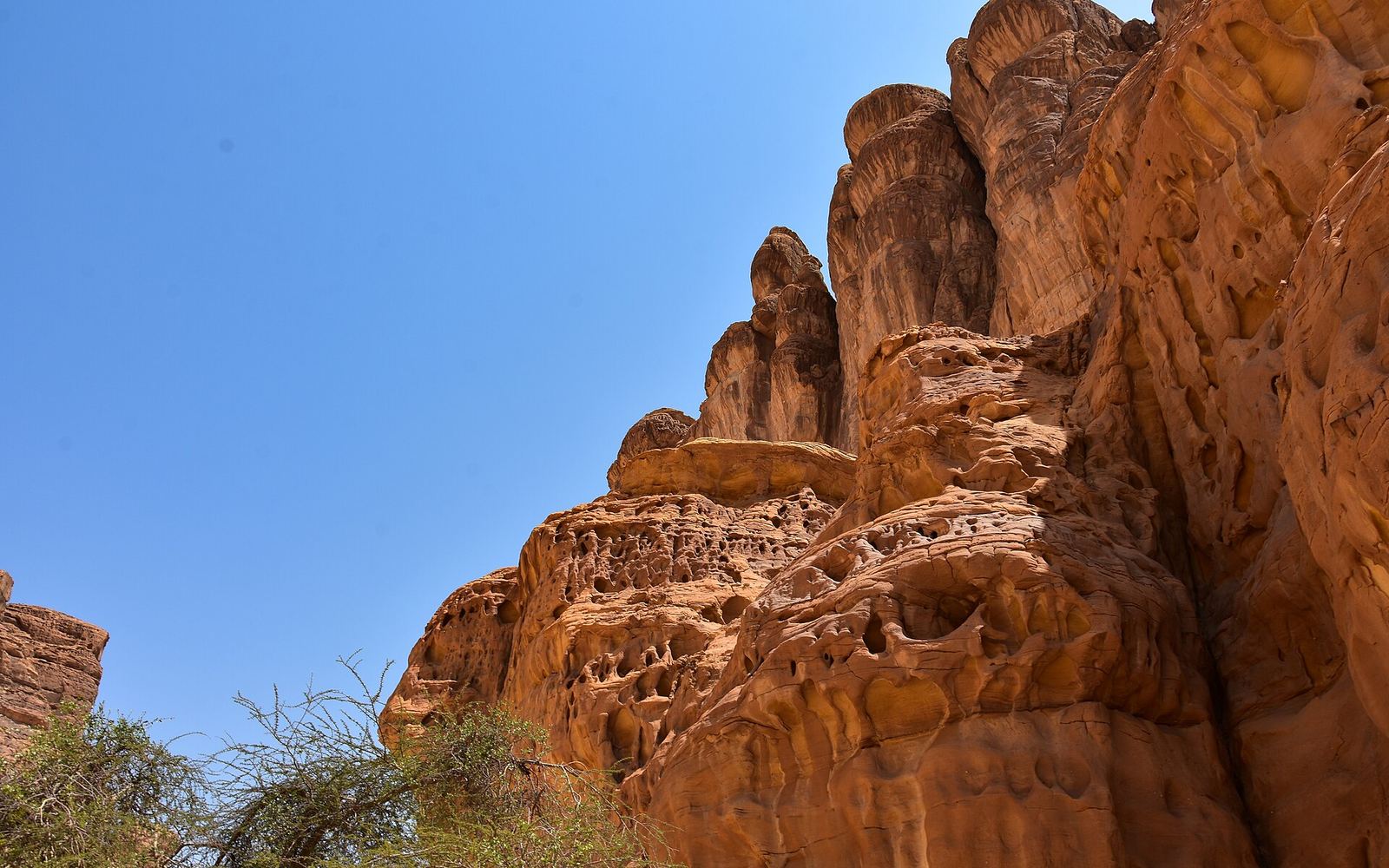
Unlike Petra, Hegra sits on open desert plain, so the tombs stand apart like islands. That space is what makes it special: you see each facade whole, with no crowds pressing against it, and the silence between stops is part of the experience.
What you will see
- Qasr al-Farid: the "lonely castle", a single four-storey tomb carved from one free-standing rock and never finished at the base. It is the most photographed monument in the country.
- Tomb of Lihyan, son of Kuza: the same tomb, named after the man it was made for; guides explain how the unfinished lower section shows the carving technique from the top down.
- Jabal Ithlib and the Diwan: a narrow siq and a rock-cut hall where the Nabataeans are believed to have held ritual banquets.
- Jabal al-Banat: a cluster of tombs with some of the finest facades, eagles and inscriptions over the doorways.
How to visit
You cannot drive yourself around Hegra. Access is by timed guided tour, booked through the official Experience AlUla website or at a visitor centre if there is space. The standard Hegra Day Tour runs year-round, takes two to three hours including transfers and starts from around SAR 95 per person. It uses air-conditioned coaches with a Rawi (local storyteller-guide) in English or Arabic. A private Premium Tour in a 4x4 for up to seven people costs from around SAR 1,000 per vehicle, and there are also wildlife and geology walks on set dates. Prices and schedules change by season, so check before you go.
Tours start from the Hegra Visitor Centre at the South Gate, which has free parking, or from Winter Park in AlUla with a coach transfer. Third-party day trips that bundle Hegra with other sights are listed on GetYourGuide and Viator; make sure the entry ticket is included.
When to go
The main season runs from October to March, when days are pleasant and evenings cool enough for a jacket. Tours sell out around holidays and during festivals, so book at least a few days ahead. In summer the tours still run, but temperatures climb well above 40°C, so take the earliest slot. Our best time to visit guide covers the seasons in more detail.
Combine it with
Hegra pairs naturally with an evening at Elephant Rock and a walk through AlUla Old Town. Allow at least two full days in AlUla, three if you want to add Dadan and Jabal Ikmah. A hire car makes the rest of the valley easy to explore: compare prices on DiscoverCars. For somewhere to stay, search Booking.com for options from desert camps to resort villas.
Tours: Hegra (Al-Hijr)
Compare guided trips, transfers and tickets.
Frequently asked questions
Can I visit Hegra without a tour?
No. Entry is only on a booked guided tour or experience, and self-driving inside the site is not permitted. Book on experiencealula.com or at a visitor centre.
How much does a Hegra ticket cost?
The shared Hegra Day Tour starts from around SAR 95 per person and includes entry, a guide and transport. Private 4x4 tours start from around SAR 1,000 per vehicle. Prices change, so check before you go.
Is Hegra the same as Petra?
Both were built by the Nabataeans. Petra in Jordan was their capital; Hegra was their main southern city, with more than 100 tombs spread across open desert.
Some links on this page are affiliate links. If you book through them we may earn a small commission at no extra cost to you. Learn more.