- AreaCentral Red Sea coast, Makkah Province
- Best forHistory, seafood, diving, sea views
- Time2–3 days
- TipVisit Al Balad in the late afternoon and stay for dinner
Jeddah has been Arabia's gateway to the Red Sea for well over a thousand years. Pilgrims bound for Makkah, spice and textile traders and seafarers from Africa and Asia all passed through, and the city still feels more cosmopolitan and easy-going than the capital. It is the Kingdom's second city, its main port, and for many visitors the first stop on the ground.
Al Balad, the historic heart
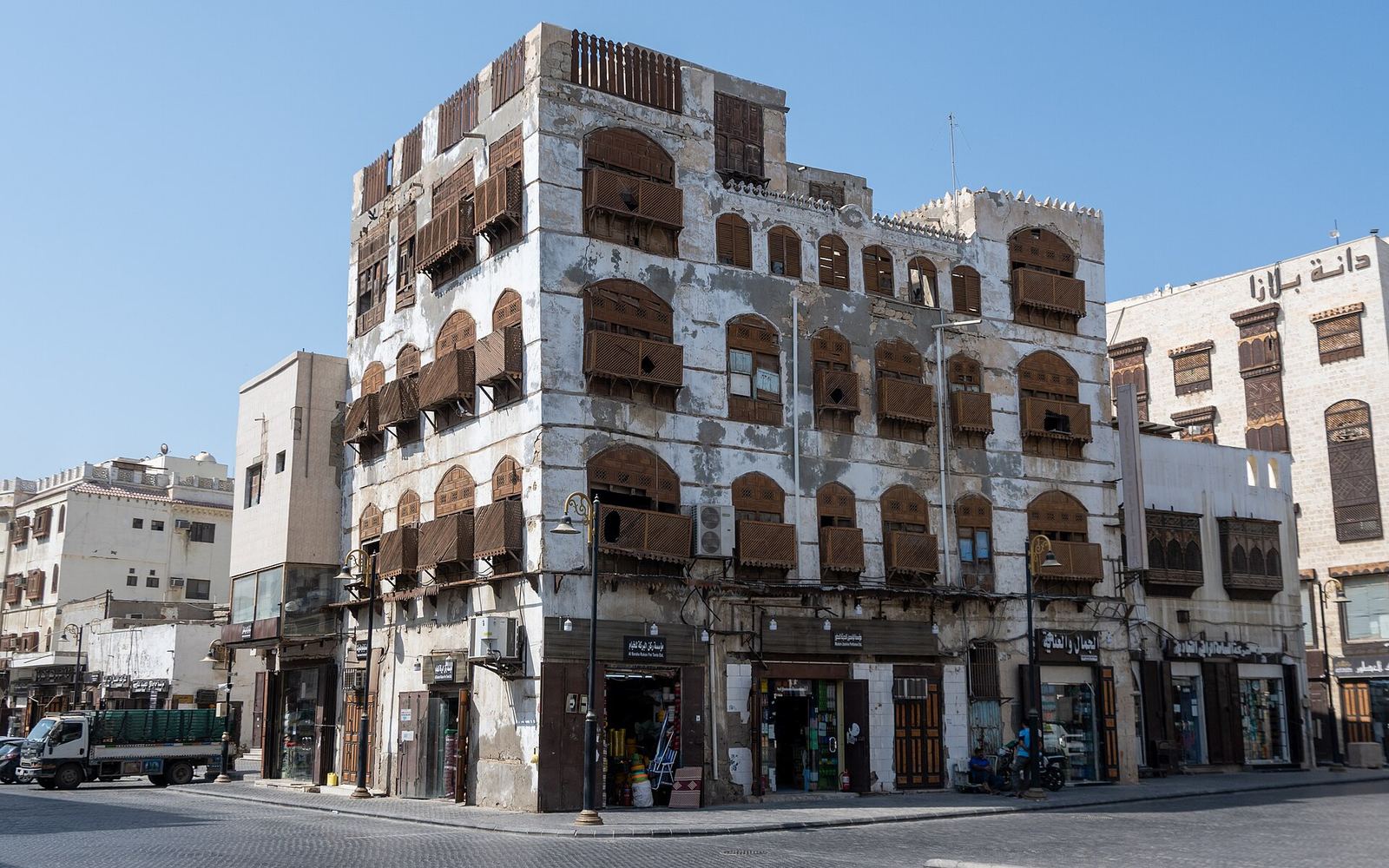
The old town of Al Balad was inscribed on the UNESCO World Heritage List in 2014 as "Historic Jeddah, the Gate to Makkah". Its tall merchant houses are built from coral stone and decorated with wooden rawasheen, the latticed bay windows that let breezes in while keeping interiors shaded and private. Highlights include Beit Nassif, where King Abdulaziz once stayed, the Al-Shafi'i Mosque and the lanes of Souq Al Alawi. A long restoration programme is under way, so some streets may be fenced off while others reopen with cafés and galleries.
The Corniche and the sea
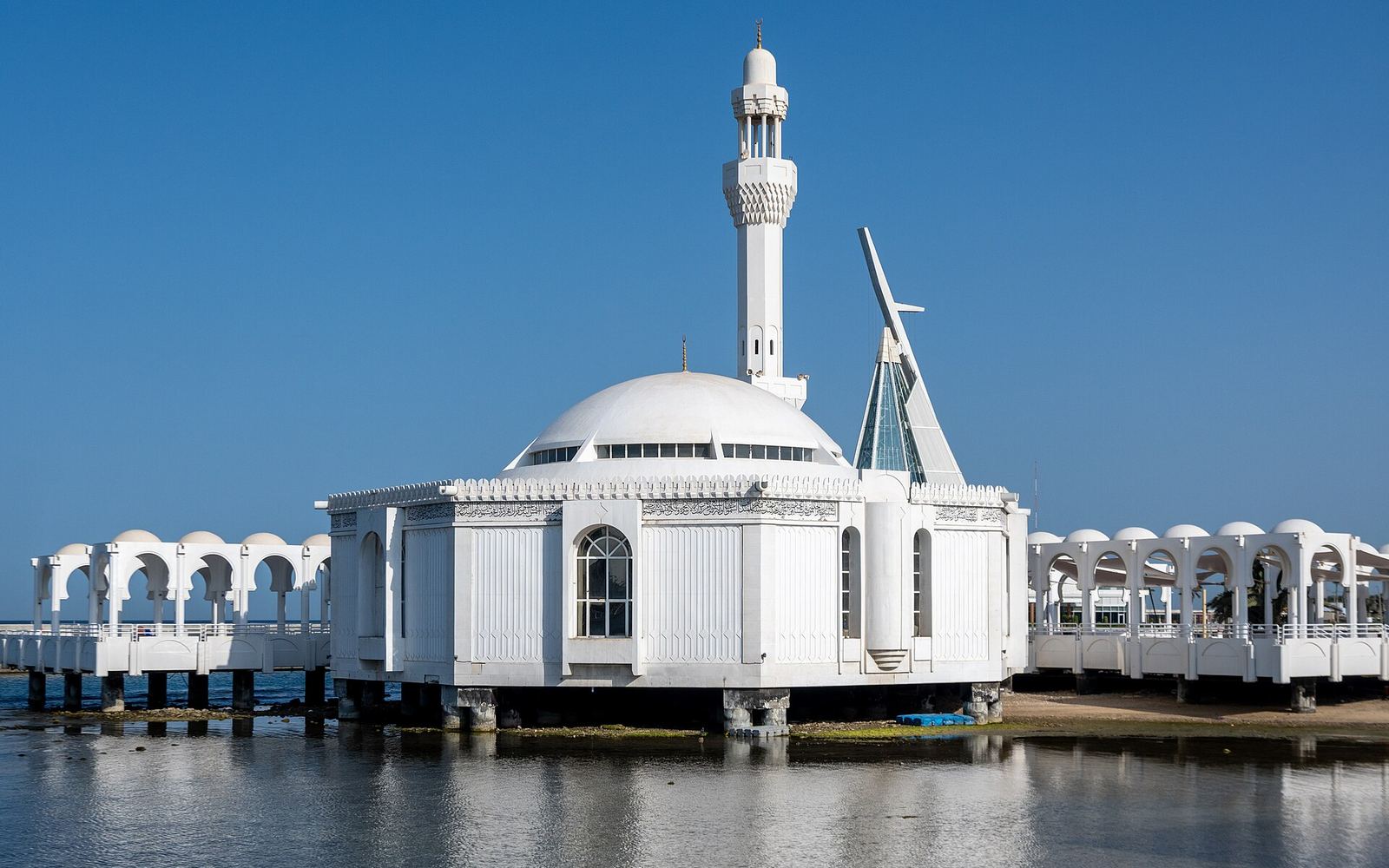
The Jeddah Corniche runs for some 30 km along the coast, with promenades, play areas, sculptures and the floating Al-Rahma Mosque. Out in the water, King Fahd's Fountain shoots seawater over 250 metres into the air and is illuminated at night; it is often described as the tallest fountain of its kind in the world. The newer North Corniche and Jeddah Waterfront are the best stretches for an evening walk.
North of the city, Obhur Creek is lined with beach clubs and dive centres. The Red Sea off Jeddah offers healthy reefs and wrecks within easy boat range, and day trips to snorkel or dive are popular: see our Red Sea diving and snorkelling guide. For more remote beaches and resorts further north, read about the Red Sea coast.
Food in Jeddah
Jeddah is the place for seafood: pick your fish at the market and have it grilled or cooked as sayadiyah with spiced rice. The city is also the home of Al Baik, the much-loved fried-chicken chain founded here in 1974, and of a lively café culture. Hejazi specialities such as mutabbaq and ma'soub are worth seeking out; our food guide has more.
Gateway to the holy cities and beyond
King Abdulaziz International Airport (JED) handles most international arrivals on the west coast, and Terminal 1 has its own station on the Haramain High-Speed Railway. The line links Jeddah with Makkah in well under an hour and Madinah in under two hours, at up to 300 km/h. Note that only Muslims may enter Makkah; non-Muslim travellers can still ride the train between Jeddah, King Abdullah Economic City and Madinah. Cooler mountain air is a two-hour drive away in Taif. See airport transfers for getting into town.
Where to stay
Hotels along the Corniche and in the northern districts of Al Shati and Al Hamra offer sea views and quick access to restaurants, while staying near Al Balad puts history on your doorstep. Compare Jeddah hotels.
Tours: Jeddah
Compare guided trips, transfers and tickets.
Frequently asked questions
Is Jeddah worth visiting for non-Muslims?
Absolutely. Al Balad, the Corniche, the Red Sea and the food scene are open to everyone. Only the city of Makkah, about 80 km inland, is closed to non-Muslims.
How do I get from Jeddah to Makkah or Madinah?
The Haramain High-Speed Railway runs from Jeddah's Al Sulaymaniyah station and the airport. Makkah is under an hour away, Madinah under two hours.
Can you swim and snorkel in Jeddah?
Yes, mainly at beach clubs, resorts and dive centres north of the city around Obhur, or on boat trips to offshore reefs. Public beaches in the city are better for walking than swimming.
Some links on this page are affiliate links. If you book through them we may earn a small commission at no extra cost to you. Learn more.