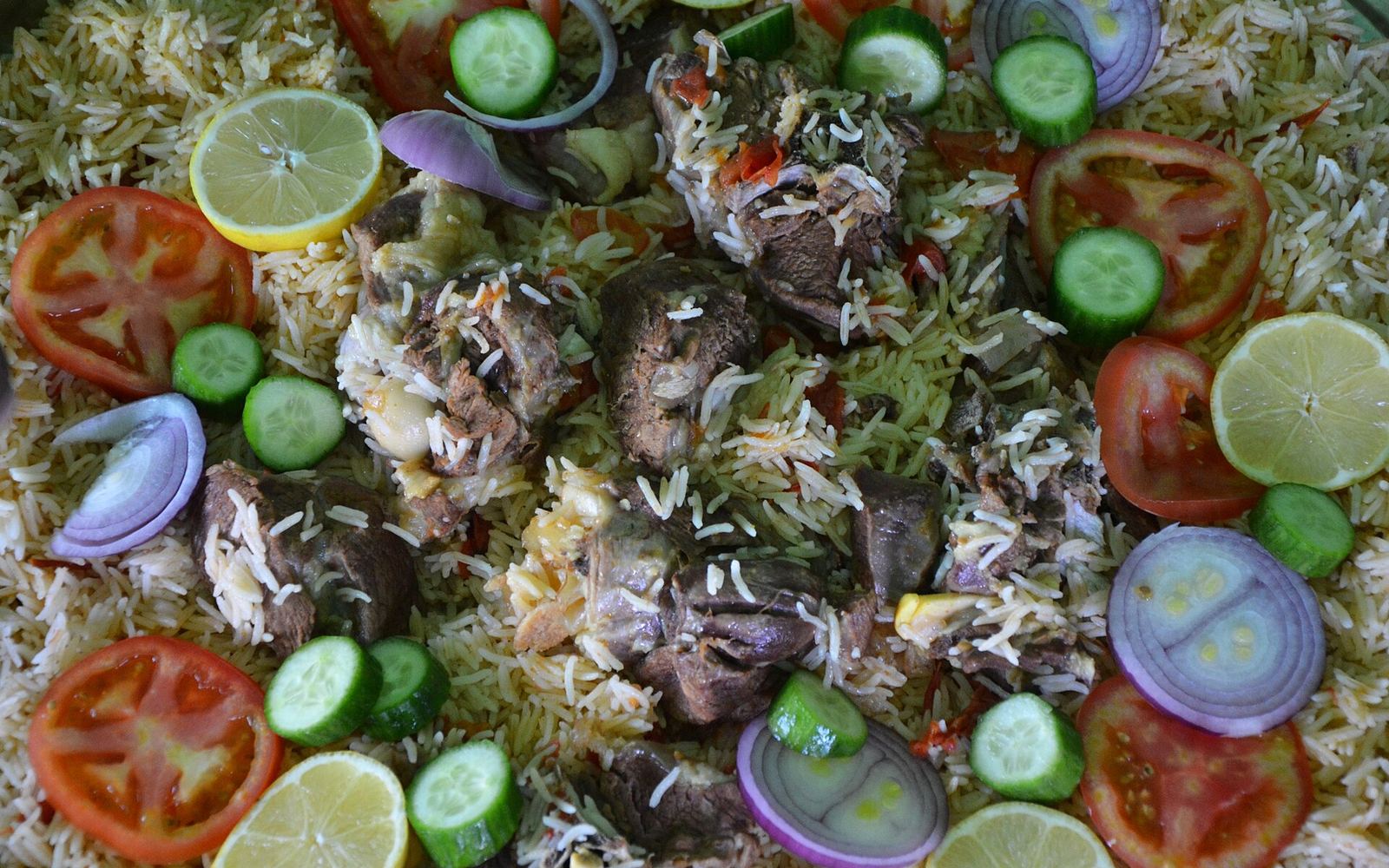
Saudi food is generous, aromatic and made for sharing. Its heart is rice and slow-cooked meat, perfumed with cardamom, saffron, cloves and dried lime, but every region has its own kitchen: hearty wheat dishes in Najd around Riyadh, a cosmopolitan port cuisine in the Hijaz around Jeddah, fish and rice along the Gulf in the east, and pit-roasted lamb and honey in the mountains of Asir. Here is what to order and how to enjoy it.
Dishes to try
- Kabsa: the national dish. Long-grain rice cooked in a spiced broth with chicken, lamb or camel, topped with the meat and often with almonds, raisins or fried onions. Every family has its own version.
- Mandi: originally from Yemen's Hadramawt and loved across the Kingdom. Meat is cooked in a sealed pit or oven above the rice, so the fat and smoke flavour the grains. Madghout is a pressure-cooked cousin.
- Jareesh: a Najdi classic of cracked wheat slow-cooked with yoghurt or broth until creamy, topped with fried onions and a pool of ghee.
- Saleeg: the Hijaz and Taif's comfort dish: short-grain rice simmered in broth and milk until soft, served with roast chicken on top.
- Margoog and qursan: Najdi stews poured over thin sheets of bread, thick with vegetables and meat; perfect on a cool winter evening.
- Haneeth: the pride of Asir. Lamb slow-roasted in a pit until it falls apart, served on rice. In Abha, follow it with areeka, a dough of brown wheat with honey and ghee.
- Sayadiyah: fish and caramelised-onion rice from the coast, the classic order in Jeddah's Al Balad and on the Gulf.
Snacks, breakfast and sweets
- Mutabbaq: paper-thin dough folded around minced meat, egg and leek (or sweet fillings such as banana and cheese) and fried on a griddle; a Hijazi street-food favourite.
- Foul and tamees: stewed fava beans with cumin and oil, scooped up with tamees, a large flatbread baked in a tandoor. The classic Jeddah breakfast.
- Sambousa: crisp triangles filled with meat or cheese, served everywhere in Ramadan.
- Luqaimat: small fried dough balls drizzled with date syrup or honey.
- Kunafa and masoub: kunafa is the shredded-pastry cheese dessert loved across the Arab world; masoub is mashed bread with banana, honey and cream.
Saudi coffee and dates
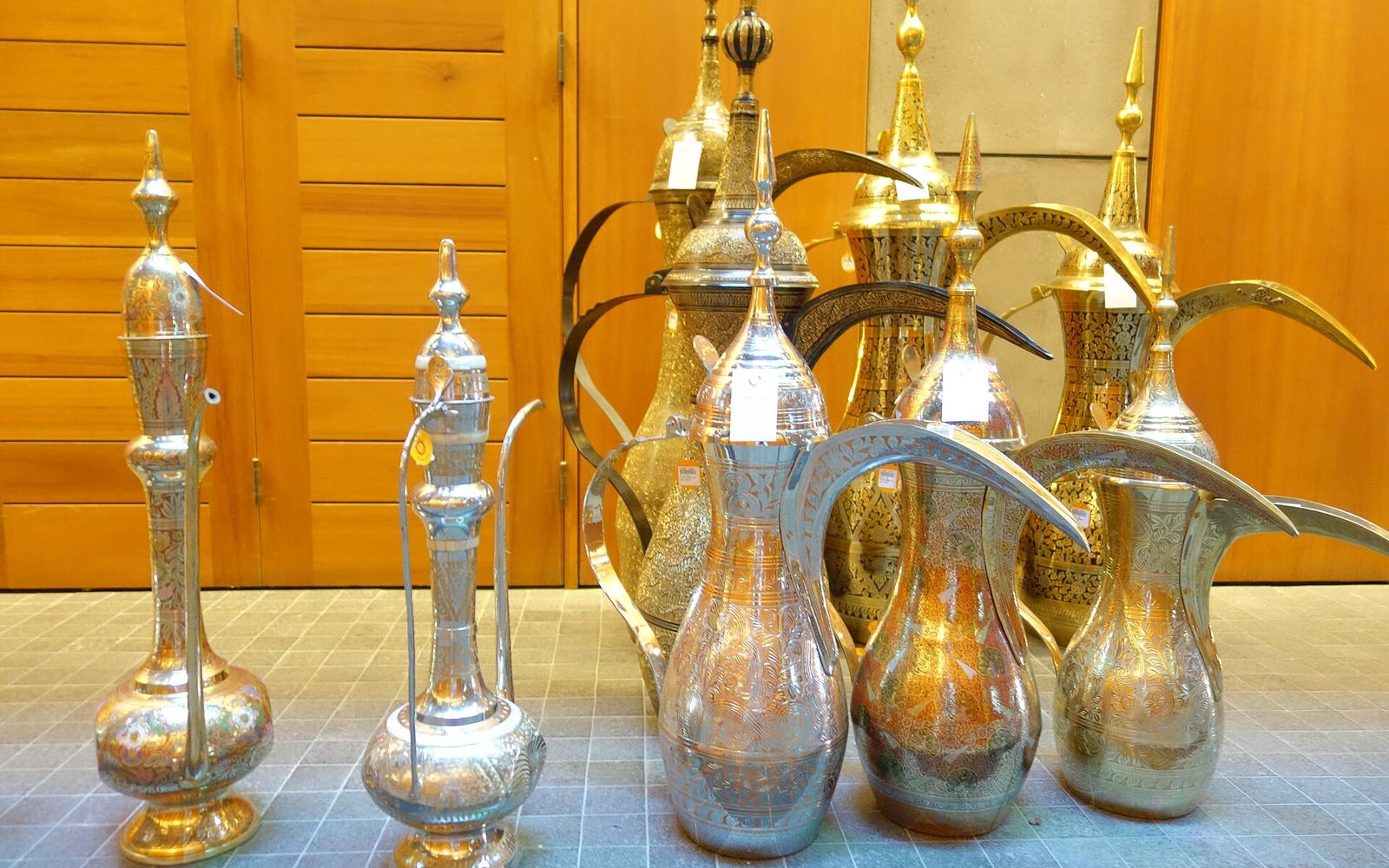
Qahwa, Saudi coffee, is pale gold rather than black: lightly roasted beans brewed with cardamom and often saffron or cloves, and served from a dallah (coffee pot) in small handleless cups. It is always paired with dates. Coffee is the first gesture of hospitality, offered in homes, offices, hotels and even some shops. Saudi Arabia's own coffee tradition runs deep: the cultivation of Khawlani coffee beans in the Jazan mountains is on UNESCO's list of intangible cultural heritage.
Dates are almost a national obsession. Look for soft, caramel-sweet sukkari from Qassim, khalas from the oasis of Al-Ahsa and dark ajwa from Madinah. Date shops and the big date markets make easy, good-value gifts to take home.
Table etiquette
- Use your right hand for eating, passing food and accepting coffee.
- Shared platters are normal. Eat from the part of the dish in front of you, and do not worry if you prefer cutlery: it is always available.
- Floor seating: at traditional restaurants you may sit on cushions in a majlis. Take off your shoes and avoid pointing the soles of your feet at others.
- Accept hospitality where you can. Declining coffee or a date entirely can seem cold; a single cup is enough.
- Halal only: pork and alcohol are not served. In Ramadan, avoid eating or drinking in public during daylight hours.
Where to eat it
For a first taste of Najdi food, book a floor-seated feast at Najd Village in Riyadh, or try modern Saudi cooking at Bujairi Terrace in Diriyah. In Jeddah, eat Red Sea fish at Al Basali in Al Balad, and in Abha go straight for haneeth. Find these and many more in our restaurant guide, or join a guided food walk on GetYourGuide to taste several dishes in one evening.
Frequently asked questions
What is the national dish of Saudi Arabia?
Kabsa, spiced rice cooked in broth and topped with chicken, lamb or camel, is widely seen as the national dish. Mandi and jareesh are close contenders for local hearts.
How do I politely refuse more Saudi coffee?
Gently shake your small cup from side to side when you hand it back. It signals that you have had enough, and your host will not refill it.
Is Saudi food spicy?
Mostly aromatic rather than hot. Dishes rely on cardamom, saffron, cloves, cumin and dried lime. Chilli usually comes on the side as a sauce, such as the tomato-based dakkous.
Some links on this page are affiliate links. If you book through them we may earn a small commission at no extra cost to you. Learn more.